
Table of Contents
- Why Loading a Flatbed Trailer Alone Is Harder Than It Looks
- When You Should Not Load Alone
- Flatbed Trailer Loading Safety: Inspect Before You Load
- Flatbed Trailer Weight Distribution: Plan Placement Before You Move Anything
- Step-by-Step: Loading a Flatbed Trailer Alone
- Flatbed Trailer Loading Equipment for Solo Work
- How to Secure a Flatbed Load Without a Second Person
- Your Next Step: Build a Solo Loading Checklist for Your Trailer
- Frequently Asked Questions
Last Updated: November 14, 2026
Why Loading a Flatbed Trailer Alone Is Harder Than It Looks
Load flatbed trailer work done alone is one of the most common and most underestimated jobs in hauling. Truckers, farmers and weekend haulers often figure a single person can handle it with enough patience. Often they can, but the job gets harder fast once the cargo is heavy and the straps need to reach across the bed.
The biggest problem is reach. A ratchet strap has to go over the load, down to a rail on the far side, and then get pulled tight. Doing that alone means walking back and forth across the trailer, often while holding a hook in one hand and the cargo steady with the other.
A common mistake is treating the strap as the only thing that holds the load. Straps work well, but they only work if the cargo is placed right, the trailer is sound, and each hook is anchored to a solid point. That is why a solo loading plan starts before the first strap is touched.
- Reaching the far side takes the most time and effort
- Cargo can shift while you walk around the trailer
- Hooks slip off rails if nobody holds them in place
- Working alone means no one spots a mistake before you drive off
When You Should Not Load Alone
Some loads are not worth the risk, no matter how careful you are. If the cargo is heavier than you can safely lift or move, do not try to manage it alone. Heavy equipment, large vehicles and oversized loads often need a second person to guide, watch and signal. If you need that extra help, see how extra hands for solo construction work are handled through this business.
Stop and get help if the trailer deck is wet, icy or muddy. Footing on a flatbed is already tricky, and slick surfaces make a fall more likely. The same goes for loads that are stacked high or unevenly shaped, since they can tip or shift in ways that are hard to catch from the ground.
Watch out: if a single strap cannot hold the load without moving, stop and rethink the setup rather than adding more tension to one side.
Flatbed Trailer Loading Safety: Inspect Before You Load
A safe solo load starts with an inspection. Walk the full length of the trailer and check the deck, the crossmembers, the rub rails and the tie-down points. Look for cracks, soft spots, loose bolts and bent or corroded metal. If anything looks off, fix it before you load.
Check your straps, chains, winches and binders too. Look for frayed webbing, damaged hooks, stretched chain links and cracked ratchet housings. A damaged strap can fail under load even when it looks fine from a distance.
Before you load flatbed trailer cargo, make sure the trailer is level and stable on the ground. Set the brakes, chock the wheels and, if the ground is soft, use stabilizers or blocks. A trailer that rocks while you walk on it is harder to load and more dangerous to work around.
Flatbed Trailer Weight Distribution: Plan Placement Before You Move Anything
Plan where every piece of cargo will sit before you lift the first item. The goal is to spread weight evenly across the trailer and keep the heaviest pieces low and near the center. Loads that sit high or sit too far to one end can cause sway, poor braking and tire wear.
Start with the heaviest items and place them over the axles, centered side to side. Lighter items go on top or toward the ends. Keep the cargo's center of gravity as low as you can, since a low, centered load is much easier to hold steady on the road.
- Put the heaviest items low and near the center
- Spread weight evenly from left to right
- Keep overhang short and mark anything that extends past the deck
- Leave space for straps to reach over the load
Step-by-Step: Loading a Flatbed Trailer Alone
A solo load works best when you separate the job into three phases: stage, position, and secure. Trying to do all three at once is how one person ends up holding a hook with one hand and a load with the other. Work through the phases in order, and do not move to the next phase until the current one is stable. You can watch demonstrations of each phase before attempting the job yourself.
Phase 1: Stage the trailer and cargo. Park on level ground, set the parking brake, and chock both sides of at least one wheel. If the trailer has a landing gear or support legs, lower them so the deck does not rock when you step on it.
Phase 2: Position the load. Load the heaviest item first and place it low and centered over the axles.
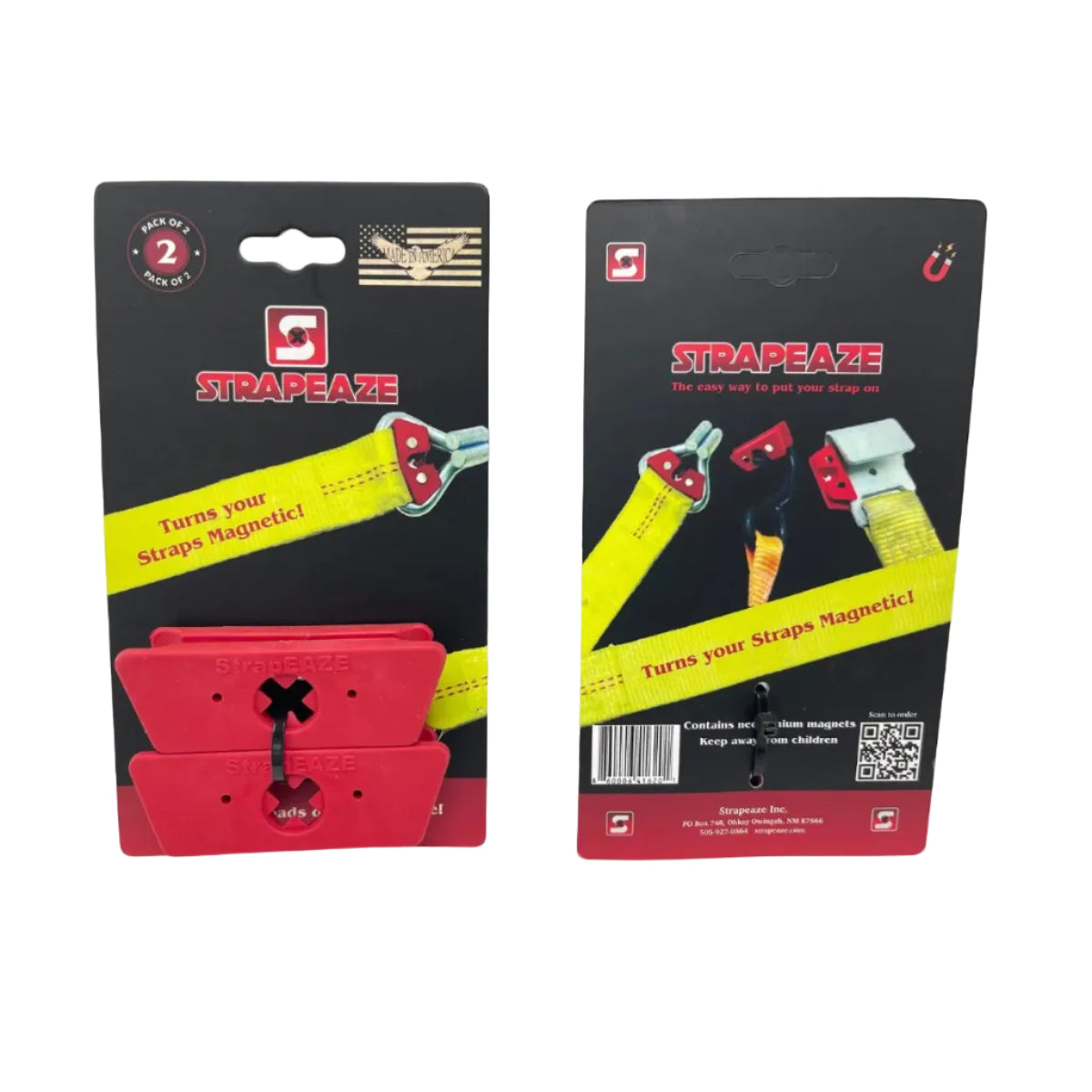
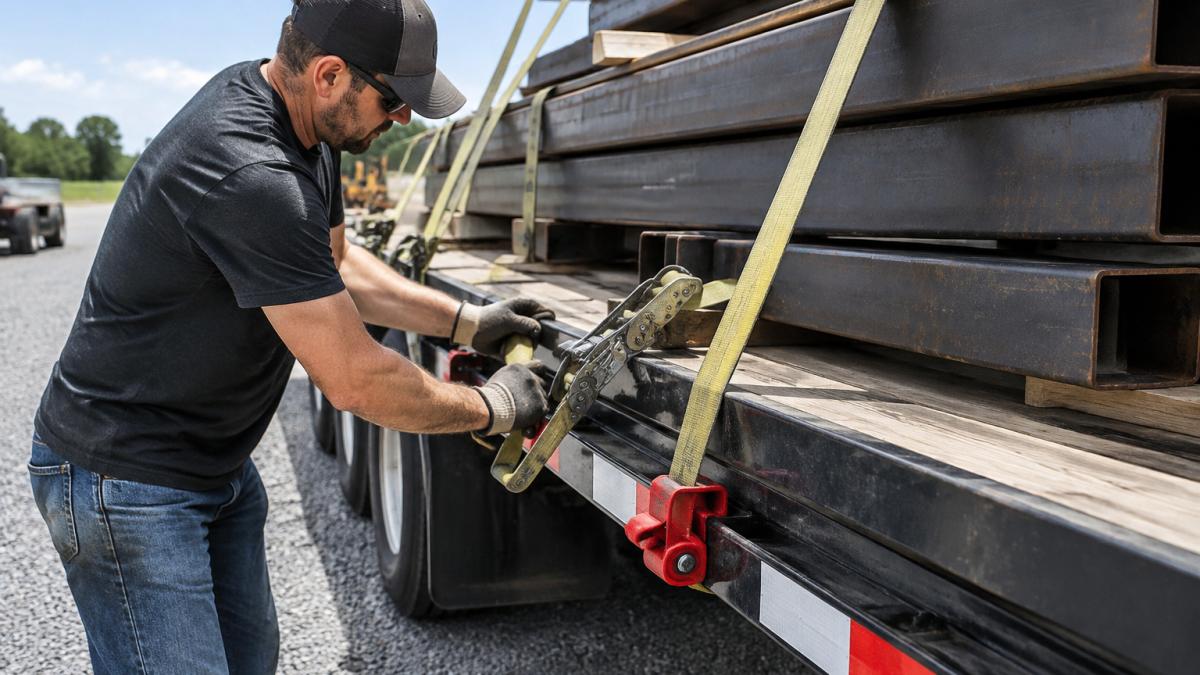
Phase 3: Secure the load. Attach the first hook to the far rail before you cross the deck, then bring the strap back over the load. A magnetic strap holder such as STRAPEAZE keeps the hook from slipping off the rail while you walk to the other side.
- Inspect the trailer and straps. Check the deck, rails, winches, and every strap before you start.
- Stage the trailer. Level ground, brakes set, wheels chocked, landing gear down if equipped.
- Lay out gear. Straps, edge protectors, chocks, and tools within reach before you lift.
- Load the heaviest item first. Place it low and centered over the axles.
- Chock rolling cargo immediately. Set the brake and chock wheels before stepping away.
- Attach the far hook first. Clip to the far rail, then bring the strap back over the load.
- Use a strap holder. A magnetic holder keeps the hook in place while you walk around.
- Tighten and check. Pull each strap snug, then push and pull the load to confirm it holds.
- Recheck after a short drive. Pull over, check the straps, and tighten any that have loosened.
Watch out: if a strap cannot be tightened without the load moving, stop and reposition the cargo rather than adding more tension to one side.
Loading Heavy Equipment and Vehicles
Heavy equipment needs the most planning because you cannot catch a rolling load alone. Drive or winch it onto the trailer slowly, and set the parking brake once it is in position. Chock each wheel before you step off the deck. Secure each wheel or axle with straps at the tie-down points the equipment's manufacturer lists, and keep the hooks away from wheels and moving parts. A winch lets you pull a vehicle or piece of equipment up a ramp from a safe distance, which is often the only way one person can load a heavy item without a spotter.
Loading Lumber, Hay, and Bulk Cargo
Bulk cargo like lumber and hay is easier to load alone, but it can shift if it is not banded properly. Stack the pieces tightly and keep the stack even. Use edge protectors wherever a strap bends over a sharp corner, since sharp edges can cut through webbing. For hay bales and similar loads, tie each strap across the full stack rather than around one bale. Tarps help keep loose material from blowing off, so check that they are tied down and do not flap.
Flatbed Trailer Loading Equipment for Solo Work
The right gear makes a solo load much easier because it lets you move and secure weight without a second person holding the other end.
| Equipment | Best For | Solo Tip |
|---|---|---|
| Ratchet straps | Lumber, bulk cargo, equipment | Use a strap holder to keep the hook in place |
| Chains and binders | Heavy steel, machinery | Use grade-rated chain and check each link |
| Winch straps | Vehicles, heavy items | Pull with the winch to tighten from one side |
| Edge protectors | Any load with sharp corners | Place them before the strap bends over the edge |
| Tarps | Hay, loose material | Tie down corners so wind cannot lift them |
| Ramps | ATVs, mowers, small equipment | Set the angle shallow and check the feet are on solid ground |
| Come-along | Pulling a load into position | Anchor to a solid point and pull in short strokes |
| Wheel chocks | Any rolling cargo | Chock both sides before stepping away |
| Magnetic strap holder | Any strap that crosses the deck | Holds the hook on the far rail while you walk around |
A winch can make a meaningful difference for moving heavy cargo. Mounted on the trailer or used as a portable unit, it lets you pull a vehicle or piece of equipment up a ramp while you stand clear of the load.
Ramps deserve their own check. Set the ramp angle as shallow as the cargo allows, and make sure the ramp feet sit on solid ground, not on gravel or grass that can shift under load.
Add a few other items to your kit: work gloves, a flashlight, and a way to reach the far side of the trailer without stepping on the deck.
Watch out: a come-along or winch line under tension can snap back if a hook slips; stand to the side of the line, not in line with it, and inspect the cable or strap before every pull.
How to Secure a Flatbed Load Without a Second Person
Securing a load alone comes down to one habit: never leave a hook unattended. Clip it to a solid anchor point, then bring the strap across. A StrapEaze magnet holds the hook against the metal rail so it does not slip while you walk to the other side.
Work in a set pattern. Start at one end, secure the first strap, then move to the next, working toward the other end. Pull each strap tight, then recheck the first one, since tightening a new strap can loosen the others. Keep straps spaced evenly and at roughly the same angle.
Protect the straps where they bend over the load. Edge protectors stop sharp corners from cutting webbing, and they keep the tension even across the strap.
Your Next Step: Build a Solo Loading Checklist for Your Trailer
Every trailer and cargo type is a little different, so a written checklist helps. Build one that covers the inspection, the weight plan, the tie-down pattern and the stop-and-check after the first few miles. Keep it in the cab or next to the trailer.
- Trailer deck, rails and crossmembers inspected
- Straps, chains and binders checked for damage
- Ground level, brakes set and wheels chocked
- Heaviest items placed low and centered
- Every hook anchored and held with a strap holder
- All straps tightened and load pushed to confirm it holds
- Recheck after the first short drive
Keep the checklist simple and review it before every load.
Frequently Asked Questions
What is the proper way to load a flatbed trailer?
Load the heaviest items first and place them low and centered over the trailer axles, so the weight sits between the front and rear axles. Keep the load within the legal weight limits and avoid stacking tall, narrow items that can tip. Once everything is positioned, secure each piece with straps or chains at the anchor points, checking that the tie-downs are tight before you drive.
How do you load a flatbed trailer by yourself safely?
Inspect the deck, crossmembers, winches, and straps before you start, and plan the placement so you don't have to reposition heavy cargo. Work from one side at a time and use a tool like the StrapEaze magnetic strap holder, priced at $9.99 for a two-pack, to hold hooks against the trailer rail while you reach the other side. If a load is too heavy or awkward to move safely alone, get help or use a loader.
How should weight be distributed on a flatbed trailer?
Keep the cargo weight centered side to side and balanced front to rear. Keep the heaviest items low and near the center, and avoid overhang past the trailer ends. Balanced weight helps with steering, braking, and stability.
What equipment do you need to load a flatbed trailer alone?
Most solo loaders need ratchet straps or chains with the right hooks, edge protectors for sharp corners, and a way to hold hooks in place while tightening. A magnetic strap holder helps because it keeps the hook attached to the trailer while you walk to the other side. Gloves, wheel chocks, and a tarp for weather protection are also useful for a one-person load.
