
Quick Summary
Magnetic strap hooks for truckers are small neodymium magnets that attach to a ratchet strap's hook and grip steel trailer rails or truck bed walls. They hold the hook in place while one person walks the strap over the load, freeing both hands for tightening. They work with flat, double J, and S hooks but are positioning aids, not tie-down anchors.
- StrapEaze magnetic clasps are designed for flat, double J, and S hooks.
- Each StrapEaze magnet is rated at a 6 lb. pull and mounts to clean steel.
- Aluminum, fiberglass, and painted or rusty surfaces may not hold the magnet well.
- The magnet's 6 lb. rating is not a cargo rating; match straps to the load's working load limit.
- StrapEaze costs $9.99 for a 2-pack and is made in the USA.
Table of Contents
- Why Truckers Struggle to Secure Loads Alone
- How Magnetic Strap Hooks Hold Ratchet Straps in Place
- Compatibility: Flat, Double J and S Hooks Explained
- Best Magnetic Strap Hooks for Truckers: Side-by-Side Comparison
- Magnetic Ratchet Straps: Load Ratings, Limits and Safe Use
- Attaching to Trucks, Trailers and Other Metal Surfaces
- Storing Ratchet Strap Hooks So They Stay Untangled
- Getting Your First Magnetic Hook Set Ready for the Road
- Frequently Asked Questions
7 Magnetic Strap Hooks Truckers Use to Secure Cargo Alone
Last Updated: November 15, 2026
Why Truckers Struggle to Secure Loads Alone
Securing a load is one of the most physically awkward jobs on the road, and it is usually done by one person. For a related guide to handling this kind of work alone, see Extra Set of Hands for Solo Construction Work.
StrapEaze was built around this exact problem. Its patented magnetic clasps are designed to hold a hook in place so you can move around the load instead of walking back and forth across the bed. The result is less time spent chasing straps and fewer loose ends dragging across the deck.
The problem shows up across more than one kind of hauling. Long-haul drivers secure mixed freight at truck stops and loading docks. Farmers move hay and equipment. Weekend haulers load ATVs, motorcycles, and boats. DIY owners throw lumber into a pickup bed. Each group faces the same core issue: one person, one set of hands, and a strap that will not stay where you put it.
How Magnetic Strap Hooks Hold Ratchet Straps in Place
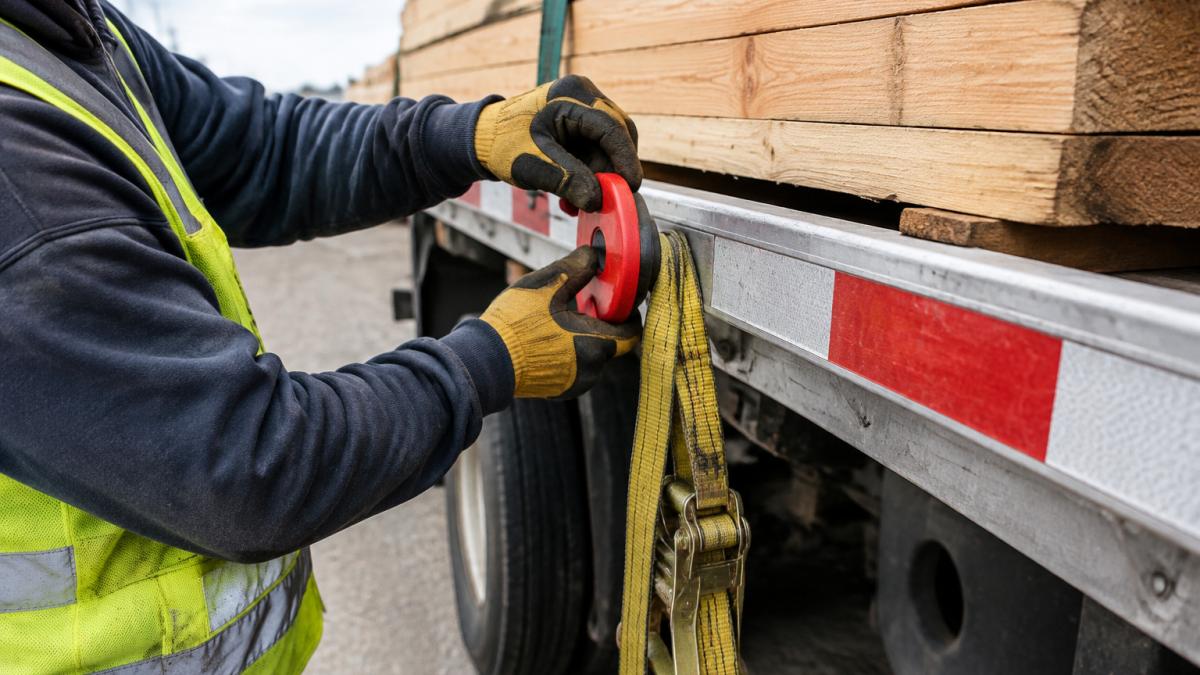
A magnetic strap hook uses a neodymium magnet to grip the metal surface of a trailer, truck bed, or rack. Once the magnet is attached, the ratchet strap hook stays put while you feed the strap over the load. That frees both hands for tightening and checking.
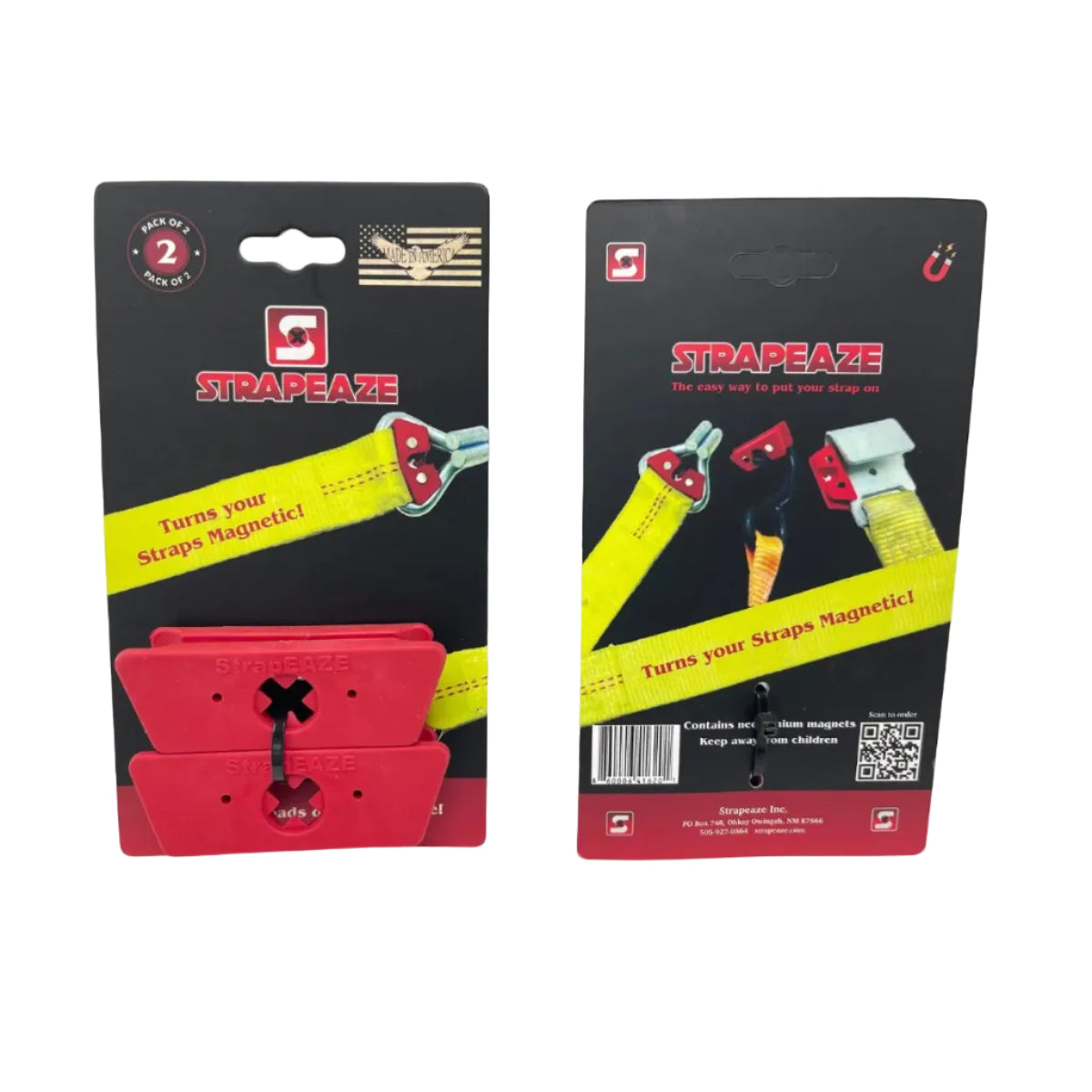
The StrapEaze unit features two neodymium magnets, each rated at a 6 lb. pull. The rubber body mounts to the hook end of a flat, double J, or S hook. You set it, then walk the strap to the other side of the cargo without the hook dropping.
Watch out: magnets work best on clean, flat steel. Paint, rust, or road grime can cut the holding force, so wipe the contact point before you rely on it.
Compatibility: Flat, Double J and S Hooks Explained
Most ratchet straps end in one of three hook styles, and the magnetic unit has to sit on that hook without interfering with how it seats on the anchor.
- Flat hooks have a wide, flat throat that sits over a rail or a stake pocket. They are common on flatbed trailers and on straps sized for heavy cargo. The magnet body mounts behind the hook, so the flat throat still drops over the rail.
- Double J hooks have two curves that cradle a rail, tube, or D-ring. They are common on utility trailers, enclosed trailers, and general-purpose straps. The double curve gives the magnet a natural shelf to sit against.
- S hooks form a tight S and are common on cargo bars, lashing points, and lighter-duty straps. The open throat means the hook can rotate, so check that the magnet does not push the hook off its anchor when you let go.
StrapEaze is designed to work with all three because it attaches to the hook rather than replacing it. You keep the strap you already own, and the hook still does the load-bearing work.
Surface and vehicle compatibility
The magnet needs ferrous metal to grip. Use this as a quick check before you buy or before you load:
| Surface or vehicle area | Magnet grip | Notes |
|---|---|---|
| Steel trailer rail or stake pocket | Strong | Best case; wipe off dust and road film first |
| Steel truck bed wall or bumper | Strong | Check that paint is not thick enough to weaken the hold |
| Painted steel | Moderate | Paint adds a gap; test with a light tug |
| Rusted or scaled steel | Weak | Rust flakes reduce contact area |
| Aluminum trailer or bed | None | Aluminum is not magnetic |
| Fiberglass, plastic, or composite | None | Common on some trailer fenders and bed liners |
| Stainless steel | Often weak or none | Many stainless alloys are not ferromagnetic |
A simple field test: hold the magnet against the surface and try to slide it sideways with light finger pressure. If it slides easily, the surface is not a reliable hold point and you should find a steel rail or bumper instead.
Matching the hook to the anchor
Compatibility is not only about the magnet. The hook itself has to seat correctly on the anchor point:
- A flat hook needs a rail or pocket wide enough for the full throat to sit down.
- A double J hook needs a rail or ring that fits inside the curve without pinching.
- An S hook needs an anchor it can wrap without slipping off when the strap goes slack.
If the hook does not seat fully, the magnet will hold it in place but the strap will not be properly anchored. Fix the hook-to-anchor fit first, then use the magnet to make the job easier.
Watch out: a magnet that grips a painted or rusty surface can let go under vibration. Test the hold on the exact spot you plan to use, not on a clean sample elsewhere on the truck.
Best Magnetic Strap Hooks for Truckers: Side-by-Side Comparison
StrapEaze is designed to work with flat, double J, and S hooks, uses patented magnetic clasps, and is made in the USA. Here is how it compares with the other options drivers search for.
| Product | Hook Compatibility | Magnet Setup | Price (USD) | Best For |
|---|---|---|---|---|
| StrapEaze | Flat, double J, S | Two neodymium magnets, 6 lb. pull each | $9.99 (2-pack) | Solo truckers and weekend haulers |
| Dynello | Varies by model | Check listing | Check listing | Buyers comparing general strap accessories |
| ProGrip | Varies by model | Check listing | Check listing | Buyers comparing general strap accessories |
Pricing and What You Get
The StrapEaze listing is $9.99 and includes 2 units. Each unit is a 3-inch flexible red rubber device with a neodymium magnet rated at a 6 lb. pulling force. It mounts to truck beds, bumpers, racks, trailers, roof racks, or any metallic part of your vehicle.
For a tool you may use only a few times a year, the cost is low.
Pros and Cons by Use Case
Long-haul drivers. The main benefit is speed at each stop. A driver who secures mixed freight can keep one hook anchored while building the rest of the load. The limit is that a 6 lb. pull is not a substitute for a properly rated strap and correct tie-down practice on heavy freight.
Farmers and ranchers. Hay, equipment, and feed loads often sit on metal trailer rails, which suits the magnet. Dusty or muddy steel may need a quick wipe before use.
Recreational haulers. Boats, ATVs, and motorcycles benefit from a hook that stays where you set it. Weekend users will likely use the unit only occasionally, so the 2-pack price is an easy decision.
DIY and homeowners. Lumber and appliances in a pickup bed are common loads. Keep the magnet off painted surfaces where possible and check the fit on the rail first.
Magnetic Ratchet Straps: Load Ratings, Limits and Safe Use
A magnetic strap hook is a positioning aid. It is not a tie-down anchor, and it is not part of the load path. The 6 lb. pull rating on the StrapEaze magnet describes how much force it takes to slide the unit off a clean steel surface.
That distinction matters because ratchet straps carry two different numbers, and drivers routinely confuse them.
- Working load limit (WLL) is the maximum load a strap is designed to secure in service. It is the number you plan around.
- Break strength (also called assembly break strength) is the load at which the strap assembly fails in a controlled pull test. It is always higher than the WLL.
Ratchet strap ratings vary by manufacturer and by hook and ratchet hardware, so read the tag sewn onto your strap rather than assuming a rating.
A few practical rules follow from that:
- Match the strap to the load, not to the magnet. Choose strap width and WLL based on the weight and behavior of the cargo, then use the magnet only to hold the hook while you work.
- Count your anchor points. The WLL applies to the strap assembly and its end hardware. A hook that is not fully seated on a rail or D-ring can slip well below its rated capacity.
- Use the right number of straps. Commercial cargo securement rules are set by the Federal Motor Carrier Safety Administration, so check the current federal requirements for your load and confirm any additional requirements with your carrier.
- Do not over-tension. Cranking a ratchet past the point where the webbing is drum-tight adds shock load and can damage the strap without improving restraint.
Watch out: a magnet that is holding a hook is not holding the load.
Inspect the whole system before each trip: webbing for cuts, fraying, and UV fading; the ratchet for bent or slipping paws; hooks for cracks or deformation; and the magnet for a clean, flat contact face.
Attaching to Trucks, Trailers and Other Metal Surfaces
Attach the magnet to clean, flat, ferrous metal such as a steel trailer rail, truck bed wall, or bumper. Press firmly, then test the hold with a light tug before you let go of the strap.
Avoid aluminum, fiberglass, and painted or heavily rusted areas, where the magnet may not grip well. Surfaces that are wet or greasy also reduce holding force, so dry and clean the contact point first.
Storing Ratchet Strap Hooks So They Stay Untangled
Hooks tangle most when they are tossed loose into a bin. Wrap each strap in a loose coil, then clip the magnetic unit to a hook and store the coil in a dry toolbox or bag. This keeps the hooks from snagging on each other and keeps the magnets from grabbing metal debris.
Store the set in a place where it will not be crushed or left in the rain for long periods.
Getting Your First Magnetic Hook Set Ready for the Road
Start by checking your hook style: flat, double J, or S. Then pick two spots on the trailer or truck where you will attach the magnet. Clean both surfaces and test the hold before loading.
Keep one unit on the strap you use most often. For a first run, practice with a light load so you learn how the hook sits on the rail before you add heavier cargo.
StrapEaze is available for $9.99 with two units per package, and it is designed and manufactured in the USA. For solo loads, it is a practical place to start.
Frequently Asked Questions
How much weight can a magnetic hook hold?
Each StrapEaze unit has a neodymium magnet rated at a 6 lb. pull, and each package includes two units. That rating describes how strongly the magnet holds the hook against a metal surface, not how much cargo the strap can restrain. Cargo load limits come from the ratchet strap itself, which carries a working load limit printed on its label. Always keep the strap's rating in mind when securing heavy loads, and never rely on the magnet to carry weight.
Do magnetic strap hooks work with ratchet straps?
Yes. The StrapEaze magnetic clasp inserts or attaches to flat, double J and S hooks on standard tie-down ratchet straps. The magnet holds the hook in place on a metal truck bed, bumper, rack or trailer so you can run the strap over the load and reach the ratchet without walking back and forth. The hook still engages the strap's normal anchor points, so the strap does its securing job as usual.
Can magnetic strap hooks hold flat, double J and S hooks?
StrapEaze is designed to work with flat, double J and S hooks on tie-down ratchet straps. Check that your hook style matches the product listing before buying, since compatibility depends on the hook shape. If you use a mix of hook types across your strap set, confirm each style before you rely on the magnet to hold it in position during loading.
